What Makes a Burial Ground ‘Natural’?
With many different types of burial ground available across the UK, it can be tricky to understand the difference between them all. If you’re looking for an eco-friendly final resting place for yourself or someone you love, then natural burial could be the perfect choice. But exactly what makes a burial ground natural? How can you be sure the burial ground you choose follows eco-friendly practices? In this guide, we hope to help answer these questions.
Definition of a natural burial ground
Different sites may interpret the concepts of ‘natural’ and ‘green’ burial in different ways, but in its Guidance for Operators the Ministry of Justice (MoJ) defines natural burial as follows:
Natural burial is a term used to describe the burial of human remains where the burial area creates habitat for wildlife or preserves existing habitats (woodland, species rich meadows, orchards, etc), sustainably managed farmland, in-situ or adjacent aquatic habitats or improves and creates new habitats which are rich in wildlife (flora and fauna). Where a funeral precedes such burial, it would typically seek to minimise environmental impact.
This can be open to interpretation, but generally there are some key rules that burial grounds should follow in order to meet the definition above.

What rules should natural burial grounds follow?
Currently, there is little regulation specifically for natural burial grounds under UK law, although sites are bound by more general burial law and are expected (but not legally required) to follow the guidance from the MoJ referenced above.
But the Association of Natural Burial Grounds (ANBG) works hard to encourage best practice and provides regulations for sites to follow in its Code of Conduct. For example, it states that natural burial grounds should take “all reasonable steps to conserve existing local wildlife, promote biodiversity and manage their projects according to sound sustainable and ecological principles.”
The three main ‘rules’ are:
Use only biodegradable materials
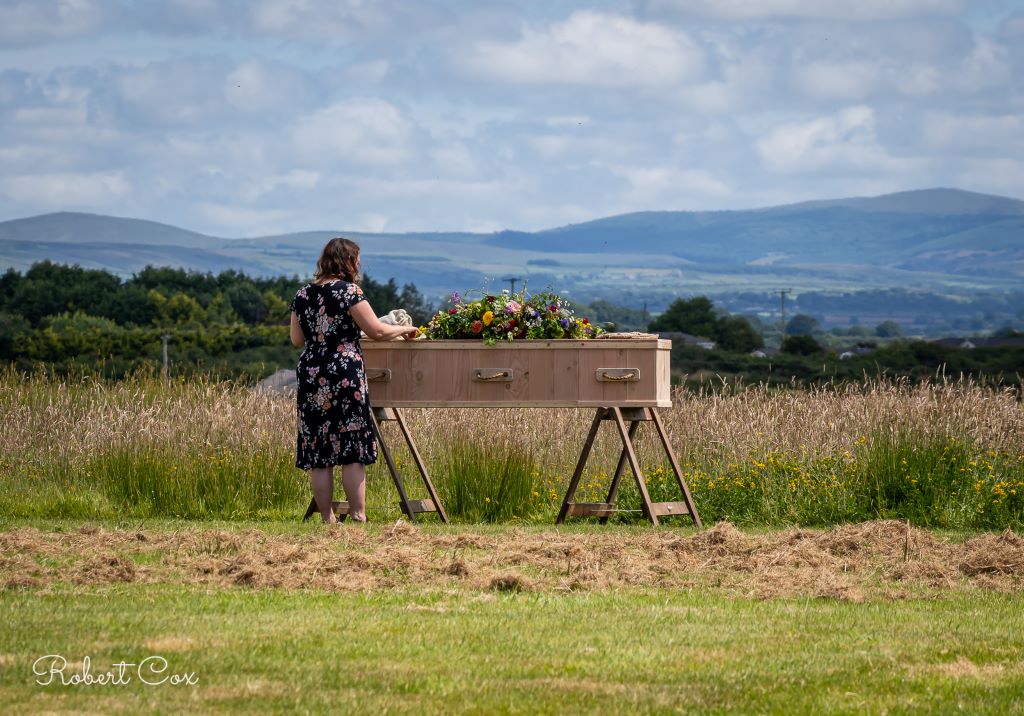
All shrouds and coffins should be made from natural materials that biodegrade, with no plastic or metal on anything interred with the body. Similarly, any flowers or tributes left at the graveside must be natural and biodegradable (e.g. no foam or plastic wrapping on flowers). The ANBG specifies that bodies should be buried wrapped in a shroud, biodegradable wrapping or a coffin made from natural materials.
Avoid embalming
Many funeral directors will suggest embalming the body in order to slow down the decomposition process. However, the chemicals used in embalming could be harmful to flora and fauna when interred, therefore natural burial grounds will usually ask that bodies are not embalmed unless this is absolutely required for legal or religious reasons. The ANBG specifies that embalmed bodies should only be accepted for burial in exceptional circumstances such as where repatriation is required.
Limit the environmental impact of funerals and memorials
Funerals held at natural burial grounds should also be a consideration, as well as the memorials used to mark a grave. In order to comply with the guidance set out by the MoJ and ANBG, natural burial grounds should avoid the use of headstones, which have an environmental impact in terms of manufacture and shipping. Instead, many offer eco-friendly options such as wooden grave markers.
Natural burial grounds should also communicate their green practices to customers both verbally and in writing. Clearly and sensitively explaining what their rules and regulations are will avoid any additional upset on the day of the funeral (e.g. a family member bringing items that the site will not allow).
How will I know if a burial ground follows green practices?
Once you’ve found a burial ground you are interested in, it’s a good idea to ask the following questions:
1) Are you a member of the ANBG? If not, why not?
2) Do you follow the MoJ guidance for natural burial grounds?
3) Can I see a copy of your policies and procedures?
Furthermore, visit the burial ground and meet with the custodian and staff to ask any questions you have. This will allow you to get a good feel for the way the site is run and enable you to make an informed decision on whether it’s the right choice for you.
Remember, while some sites will be standalone natural burial grounds, others will be natural burial areas within more traditional cemeteries. Some will be privately owned, while others will be charitable trusts or run by the local council. Regardless, it’s important for all site operators to follow best practice for the natural burial areas they manage.
The vast majority of natural burial grounds will do their best to follow the guidelines and codes in place. But do your own research too – your final resting place is an important decision for you and for those you love.
Find a natural burial ground near you
You can search the NBA Directory to find a natural burial ground near you, but please note that we are in the process of building up the directory, so this is not yet a full list. If you would like to view a list of the natural burial grounds registered with the Association of Natural Burial Grounds (ANBG), you can do so via the Natural Death Centre website.